Content
Roll failure in a roughing stand doesn't just mean downtime—it means scrapped billets, emergency orders, and a production schedule that unravels fast. The roll at the center of that stand is almost always a cast steel roll, and understanding what separates a good one from a great one can save a mill significant cost per campaign.
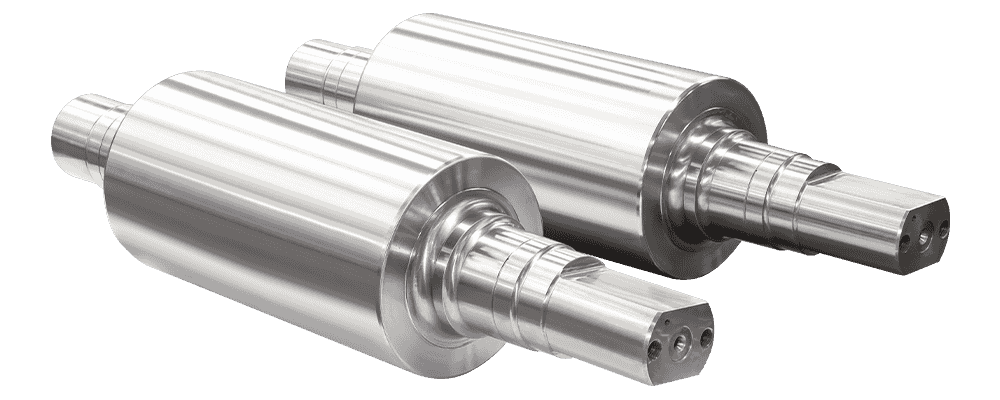
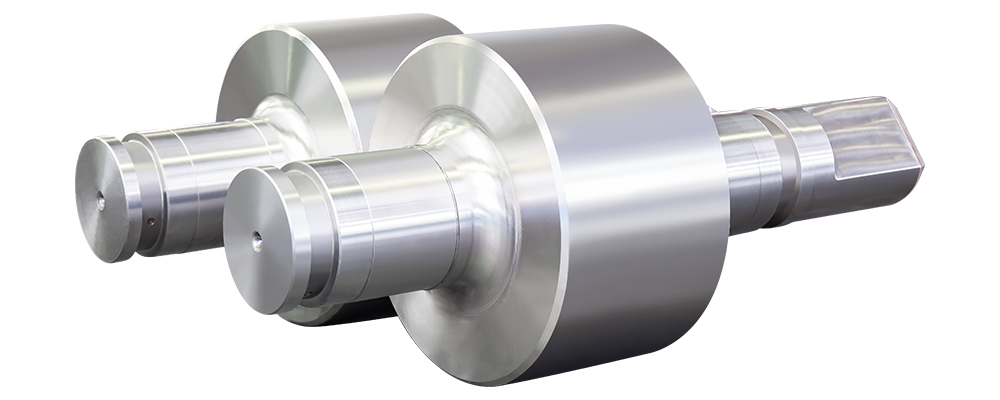
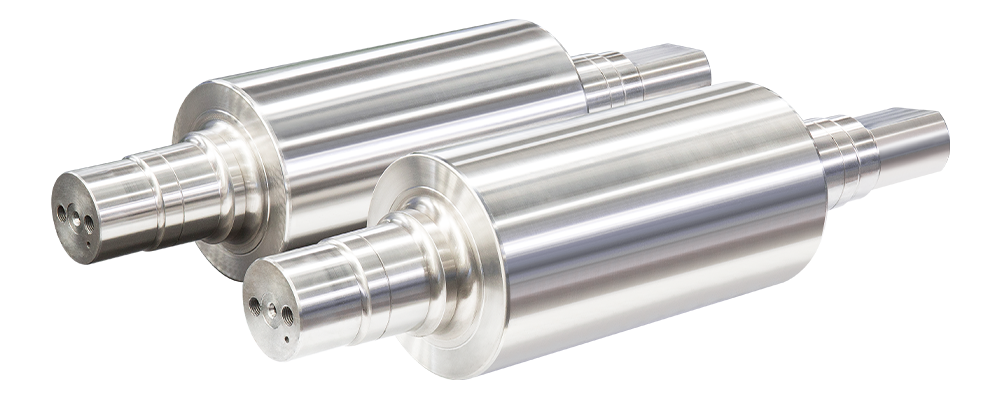
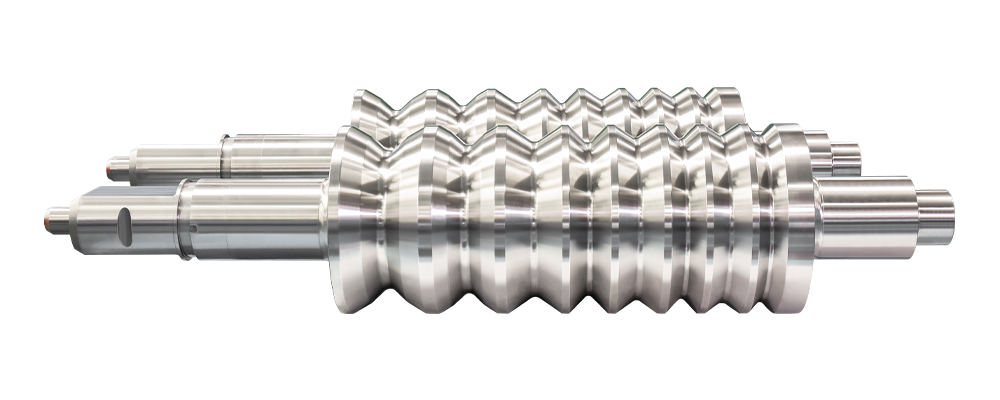
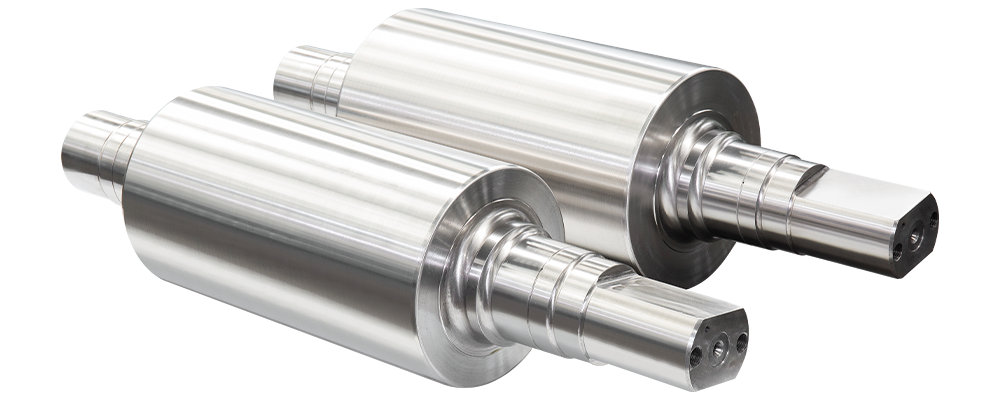
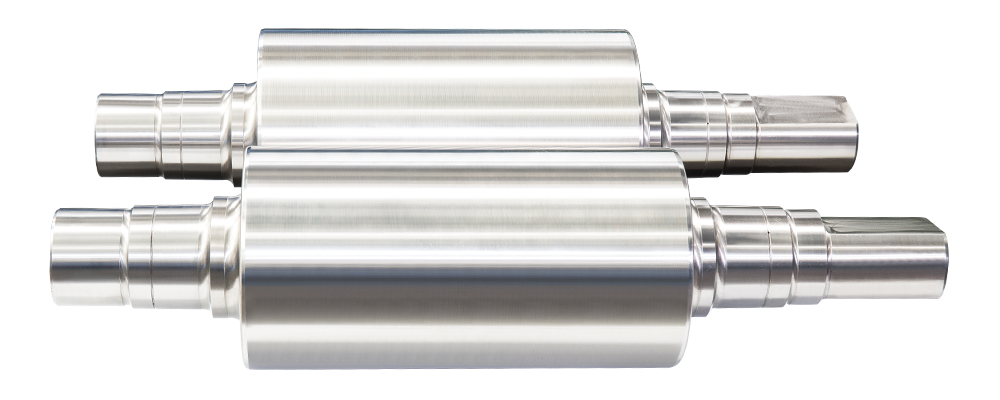
A cast steel roll is a cylindrical tool produced by pouring molten steel into precision molds, then subjecting it to controlled heat treatment. Unlike a forged roll—which is mechanically worked to refine grain structure—a cast roll achieves its properties through alloy chemistry and thermal cycles. The result is a component that can be tailored for hardness, toughness, and thermal fatigue resistance across a wide range of mill applications.
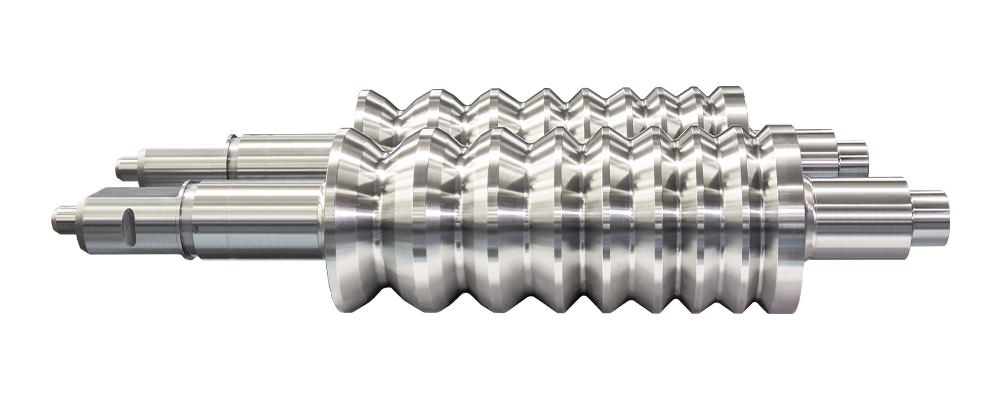
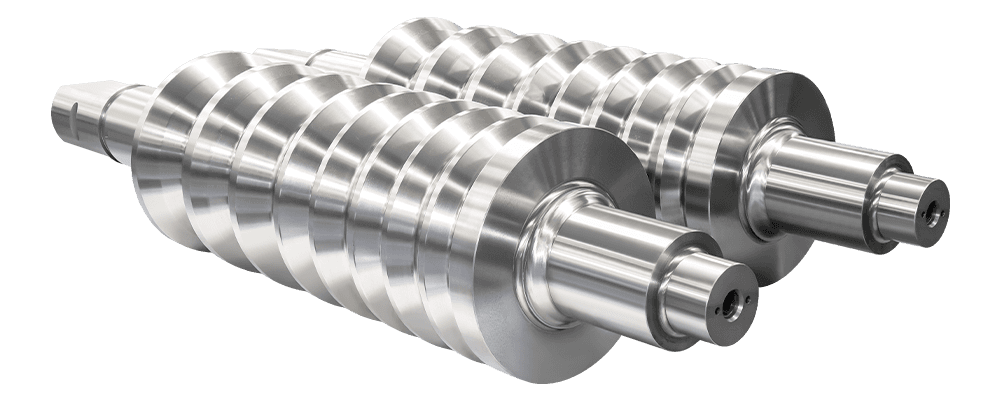
cast steel rolls for rolling mills broadly divide into four grades, each with a distinct property profile: Alloy Cast Steel (AS), Adamite (AD), Graphite Steel (GS), and High Speed Steel (HSS). Choosing the wrong grade is the single most common reason mills see shorter-than-expected roll campaigns.
Alloy Cast Steel Rolls (AS) are the backbone of roughing and intermediate stands in hot strip and section mills. Grades like AS65I, AS70II, and AS75I cover a hardness range suited to the heavy reduction loads and thermal shock of early-pass rolling. The matrix—sorbite with dispersed carbides—gives these rolls the toughness to absorb impact without cracking while still resisting abrasion from descaled billets. For blooming and slabbing mills in particular, AS75I is a well-matched choice: the higher alloy content handles the extreme billet temperatures at that stage of processing.
Adamite Rolls (AD) occupy the middle ground between cast iron and full alloy steel. The hybrid structure—harder outer shell, tougher core—delivers a property combination that all-steel rolls cannot match at equivalent cost. AD180, for example, targets roughing stands where thermal crack resistance is non-negotiable; AD140I is used in section mill finishing where wear dominates. adamite rolls for section and rail mills are also notable for their near-zero hardness drop across the working layer—a practical advantage when tracking roll wear over a campaign.
Graphite Steel Rolls (GS) introduce free graphite into the steel matrix, which acts as a built-in lubricant at the roll surface. GS150 and GS160 are common in section mills and roughing stands where the graphite phase reduces adhesion between roll and workpiece and smooths out surface finish. GS190 is specified for blooming mills. The tradeoff is slightly lower tensile strength versus alloy cast steel, so stand selection matters.
High Speed Steel Rolls (HSS) are the high-performance option for finishing stands and pre-finishing positions where surface quality drives everything. The dense carbide network—primarily MC and M₂C types—gives HSS rolls wear resistance that extends campaign life dramatically compared to conventional grades. The cost premium is real, but in high-tonnage continuous mills, the cost-per-tonne improvement frequently justifies it.
| Grade | Typical Hardness (HSD) | Primary Application | Key Strength |
|---|---|---|---|
| AS65I / AS70II | 35–55 | Hot strip roughing & intermediate stands | Toughness + thermal fatigue resistance |
| AS75I | 40–55 | Blooming & slabbing mills | High-load resistance at elevated temperature |
| AD140I / AD160I | 40–55 | Section mill, rail mill | Uniform hardness across working layer |
| AD180 / AD200 | 50–65 | Roughing stands, universal mills | Thermal crack resistance, toughness |
| GS150 / GS160 | 35–50 | Section mill, roughing mill | Surface lubrication, adhesion reduction |
| HSS | 75–85 | Finishing & pre-finishing stands | Exceptional wear resistance |
Beyond grade, three parameters determine whether a roll will perform as expected. First, hardness uniformity: a surface hardness figure means little if the drop from barrel center to edge is uncontrolled. Demand hardness mapping across the full barrel length. Second, residual stress state: improper heat treatment leaves tensile residual stress at the surface, which is a direct precursor to spalling. Third, chemical composition verification: alloying elements like Cr, Mo, Ni, and V control carbide type and distribution—ask for heat certificates and confirm against the grade specification.
Casting defines the chemistry; heat treatment defines the microstructure. For alloy cast steel rolls, the sequence typically runs through high-temperature diffusion annealing to homogenize the as-cast segregation, followed by normalizing to refine the grain, and finally tempering to set the hardness-toughness balance. The target matrix for most AS and AD grades is sorbite—a fine pearlite with dispersed carbides—which combines respectable hardness with the crack arrest toughness that roughing stands demand.
Skipping or shortcutting the diffusion anneal is a common cost-cutting move that mills should watch for in supplier audits. The result is carbon and alloy segregation that creates local hard spots—and local soft spots—across the barrel, leading to uneven wear patterns and premature surface damage. understanding how heat treatment affects grade selection and performance is one of the most practical ways to tighten roll specification with suppliers.
When sourcing cast steel rolls, the following documentation should be standard, not optional:
Manufacturers with an established production license and quality system—such as ISO 9001 certification combined with metallurgical roll-specific production approvals—provide a traceable audit trail for each of these items. That traceability matters most when a roll fails early and root cause analysis is needed.
Roll selection is ultimately a cost-per-tonne optimization, not a hardness maximization exercise. A roll that lasts twice as long but costs three times as much is a poor trade. Conversely, under-specifying a roll for a demanding stand—choosing GS where AS is required, or AD where HSS would pay back in extended campaigns—drives up total cost through frequent changes, surface quality losses, and potential cobble damage. a complete guide to rolling mill roll types and selection criteria provides a structured starting point for stand-by-stand grade mapping.
The right cast steel roll, correctly specified and properly maintained, is not a consumable—it is a process variable. Treating it as one is how high-performing mills keep their cost curves moving in the right direction.

Copyright © Huzhou Zhonghang Roll Co., Ltd. All Rights Reserved.


 English
 中文简体
中文简体