Content
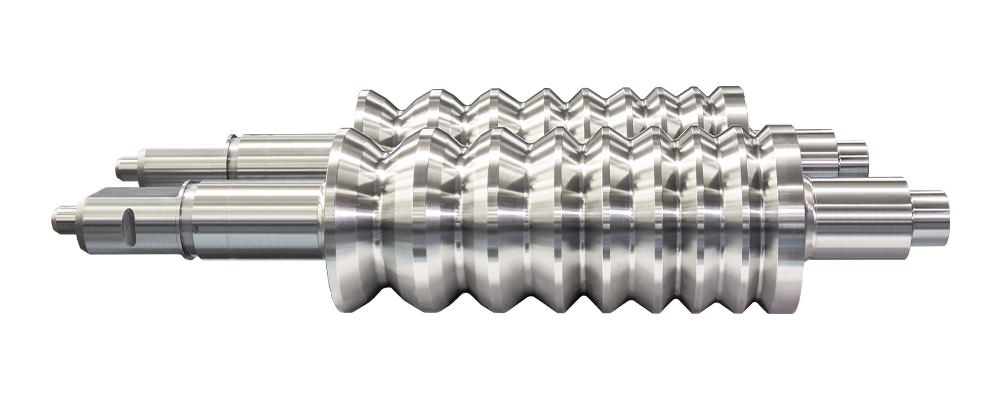
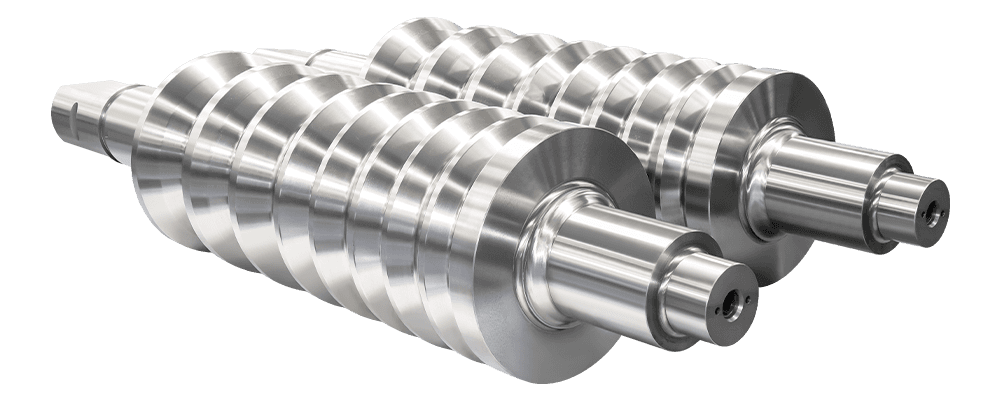
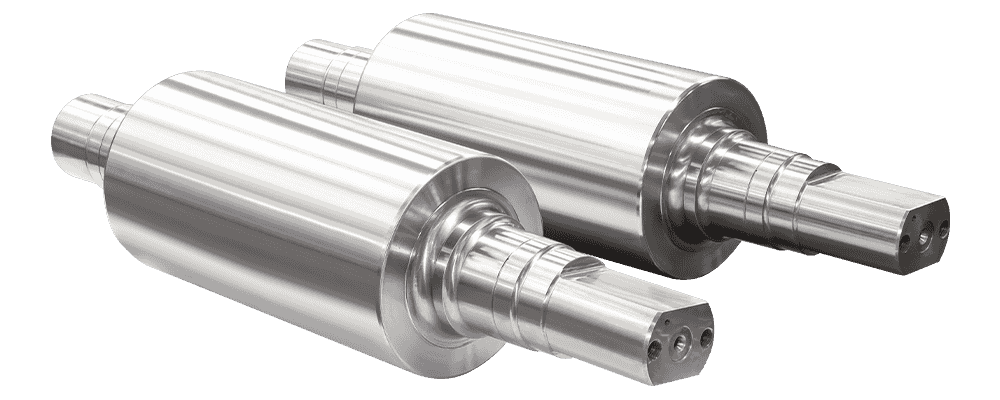
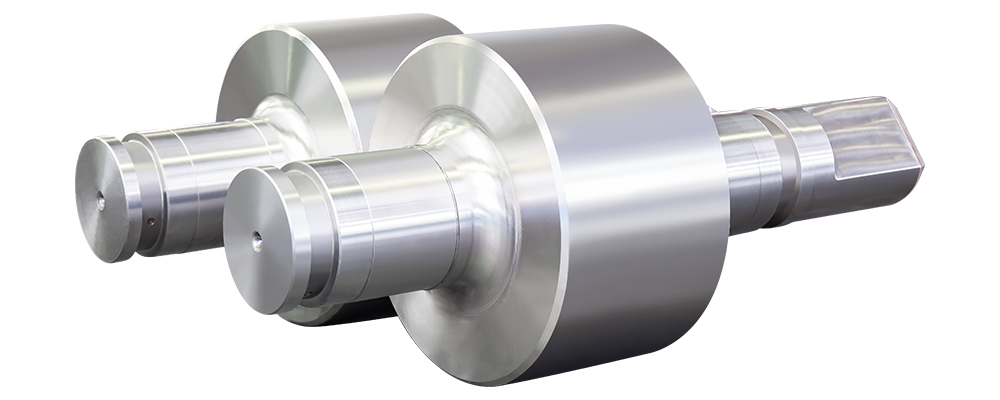
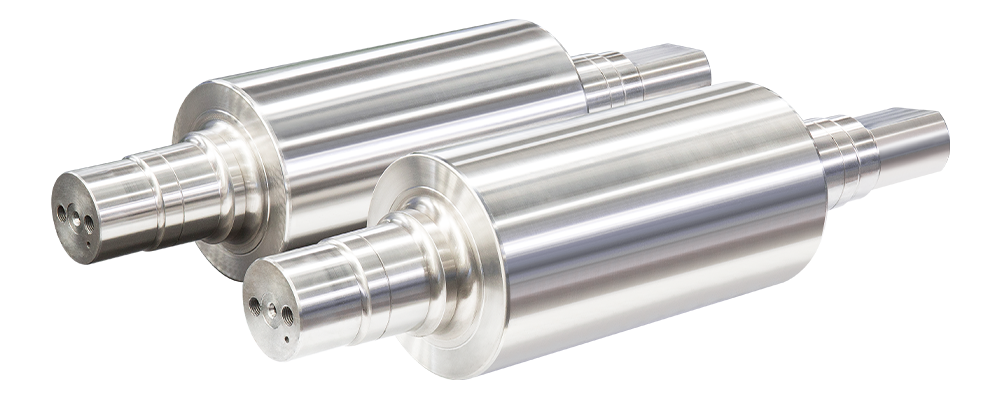
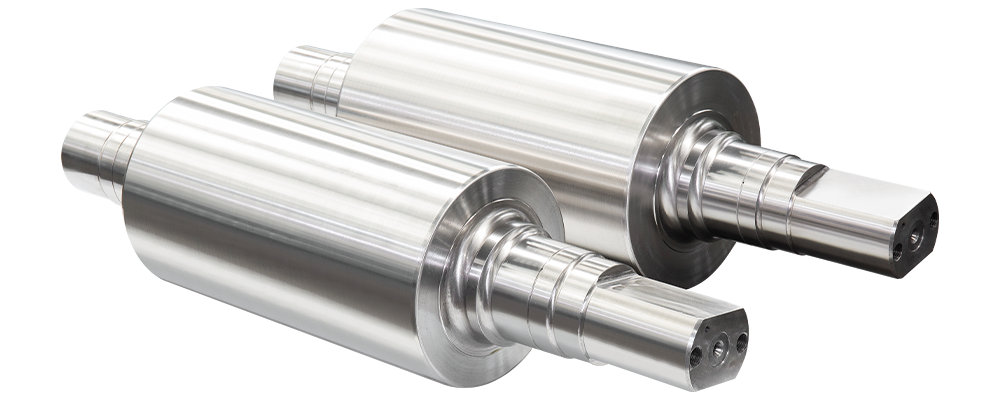
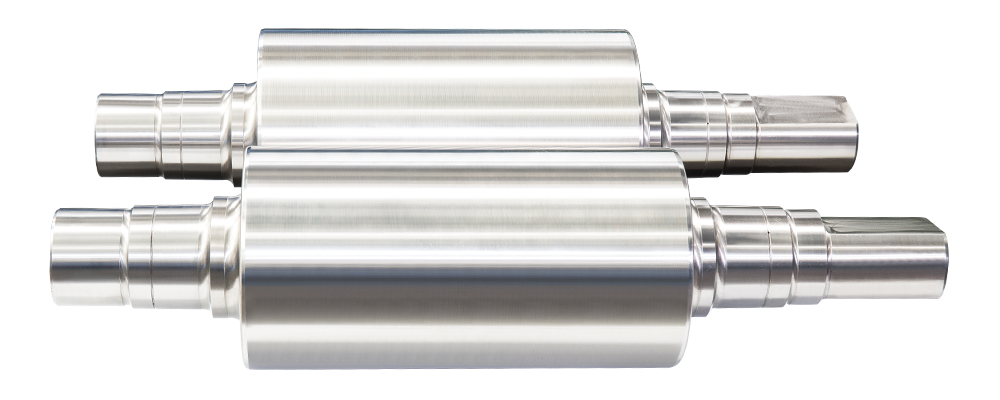
Roll change downtime costs a hot rolling operation more than just time — every unplanned stop eats into throughput, labor, and product quality. That's the real reason high speed steel rolls have become the default choice for finishing and pre-finishing stands worldwide. They last significantly longer per groove pass than conventional cast iron rolls, and the numbers back it up: a single groove on an HSS roll can handle 3 to 5 times the steel tonnage compared to high-nickel-chromium rolls, translating directly into fewer interruptions and lower roll consumption per ton of output.
The performance advantage starts at the chemistry level. HSS rolls contain a carefully engineered mix of alloying elements — carbon (1.50–2.20%), chromium (3.00–8.00%), molybdenum (2.00–8.00%), vanadium (2.00–9.00%), and tungsten (up to 8.00%) — that produce two dominant carbide types in the microstructure: MC and M2C. These carbides are harder than anything formed in standard cast iron, and they're distributed through a martensitic matrix that resists both abrasion and deformation under load.
The critical property that separates HSS from older roll materials is red hardness — the ability to retain hardness at elevated temperatures. In a hot rolling environment, roll surfaces regularly contact steel at 900°C and above. Conventional rolls soften under this thermal load, accelerating groove wear. HSS rolls maintain their surface hardness through the entire working layer, meaning the wear characteristics at depth are nearly identical to those at the surface. There's no "soft core surprise" as the groove wears down.
Hardness typically ranges from HSD 75 to 95 for standard HSS grades, with semi-high-speed steel (S-HSS) variants reaching HSD 80–98 for applications where surface finish requirements are especially demanding. A thin, dense oxide film that forms on the roll surface under proper cooling conditions further reduces friction and acts as a natural thermal barrier during rolling passes.
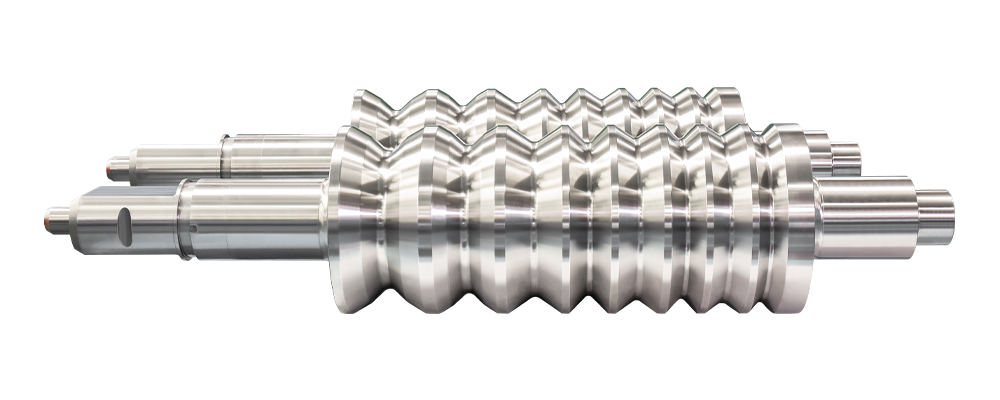
HSS rolls are not a one-size-fits-all solution — their deployment is concentrated where wear rates are highest and surface quality matters most. The primary application areas include:
For bar mill applications specifically, HSS rolls with a barrel diameter range of Ø300–700mm and hardness of HSD 75–95 are the standard specification. The S-HSS grade, with a modified composition (C: 0.60–1.20%, reduced vanadium and tungsten), offers a balance between the toughness needed for hot strip work and the wear resistance required for high-output finishing stands.
Procurement teams sometimes hesitate at the unit price of HSS rolls compared to ductile iron alternatives. That hesitation disappears when the calculation shifts from cost-per-roll to cost-per-ton-rolled. A mill consuming five ductile iron rolls in the time one HSS roll lasts isn't saving money — it's paying five times the roll change labor, five times the roll shop regrinding cost, and accepting five disruptions to rolling rhythm that ripple through downstream scheduling.
| Metric | High Nickel-Chromium Roll | HSS Roll |
|---|---|---|
| Single-groove steel passing | Baseline (1×) | 3–5× baseline |
| Hardness uniformity (surface to core) | Decreases with depth | Consistent through working layer |
| Red hardness at rolling temperature | Moderate | High |
| Roll change frequency | Higher | Significantly reduced |
The hardenability advantage is particularly important during the later stages of roll campaign life. Because HSS hardness barely drops from the surface into the working layer, each regrind cycle exposes a fresh surface with almost identical performance characteristics. Mills can plan their grinding schedules with confidence rather than managing the unpredictable performance degradation that comes with rolls whose hardness profile tapers with depth.
Two primary grades cover most rolling mill requirements. Standard HSS suits bar finishing, wire pre-finishing, and section mill applications where high alloy content and a broad hardness range (HSD 75–95) are the priority. S-HSS targets hot strip work rolls and stands where toughness matters more — the lower carbon and vanadium content improves resistance to thermal cracking while still delivering substantially better wear life than cast iron alternatives.
Alloying element selection within the HSS family matters too. Tungsten and molybdenum contribute the hardest carbides; vanadium refines grain size and adds abrasion resistance; chromium improves hardenability and corrosion resistance in humid mill environments. Rolls with higher vanadium (toward the 9% upper limit) are typically specified for the most abrasive applications, while those with elevated tungsten see duty in stands with severe thermal cycling.
For mills currently running ductile iron or high-Ni-Cr rolls in finishing positions, a custom HSS roll specification matched to the specific rolling material, stand position, and cooling configuration will deliver the best return. A generic HSS grade applied without application context leaves significant performance on the table.
HSS rolls reward structured maintenance. Ultrasonic flaw detection between campaigns catches subsurface fatigue before it propagates to the surface and causes unexpected failures. Dimensional checks after each regrind confirm that the roll profile still falls within tolerance — HSS's consistent hardness through the working layer means groove wear is more uniform and predictable than with softer materials, making dimensional assessment straightforward.
Cooling system performance directly affects HSS roll life. The protective oxide layer that reduces friction and acts as a thermal shield only forms reliably when cooling water flow rate and coverage are maintained at spec. Mills that cut cooling as an energy-saving measure frequently see disproportionate reductions in roll campaign length — the oxide layer breaks down under thermal shock, and wear accelerates.
Paired with a high speed steel roll ring in applicable positions, and supported by complementary cast steel roll grades in roughing stands, a well-specified HSS program reduces total roll consumption, smooths production scheduling, and consistently delivers the surface quality that downstream processors and end customers expect.

Copyright © Huzhou Zhonghang Roll Co., Ltd. All Rights Reserved.


 English
 中文简体
中文简体