Content
For strip mills demanding consistent surface finish and tight gauge tolerances, high speed steel rolls deliver 3 to 5 times the wear resistance of conventional indefinite chill iron rolls. This substantial gain in campaign length directly lowers roll consumption per ton of steel rolled, while the metallurgical properties of these alloys maintain hardness at elevated temperatures where traditional materials soften.
The technology has shifted from experimental adoption to a standard requirement in the early finishing stands of hot strip mills. The core advantage lies in the combination of a tempered martensitic matrix with a high volume fraction of extremely hard, thermally stable carbides, allowing mills to push rolling loads and temperatures without sacrificing dimensional accuracy. Understanding the manufacturing routes, carbide engineering, and operational limits is essential for optimizing roll shop practices and mill scheduling.
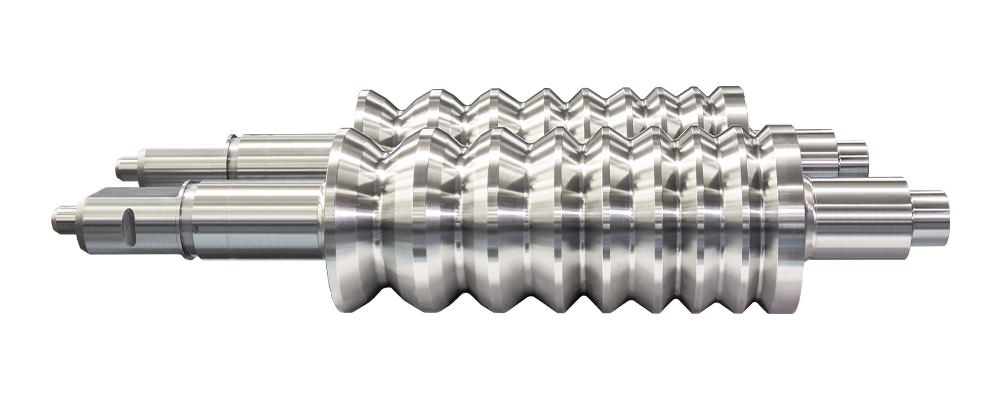
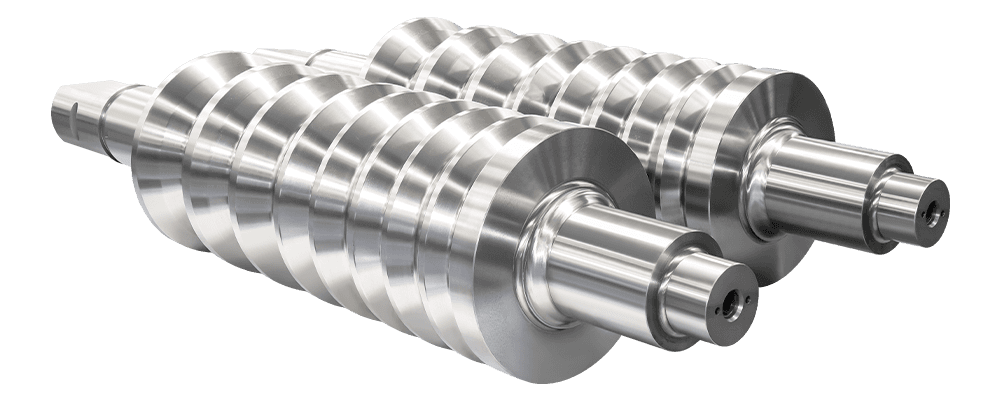
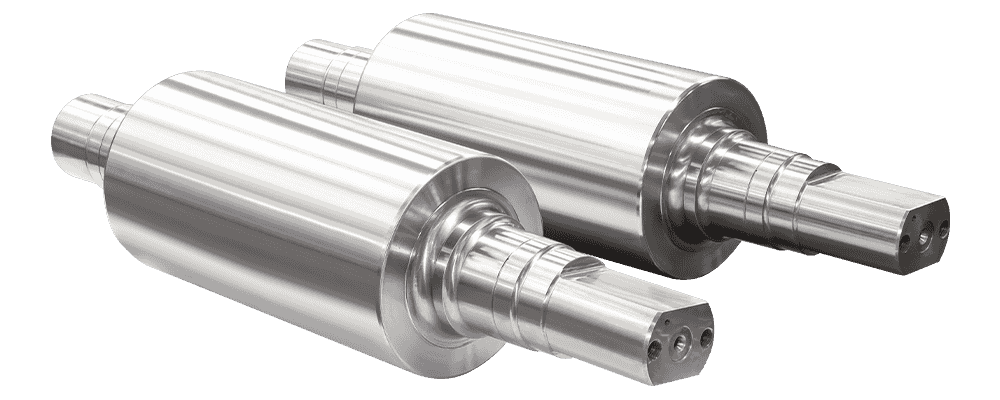
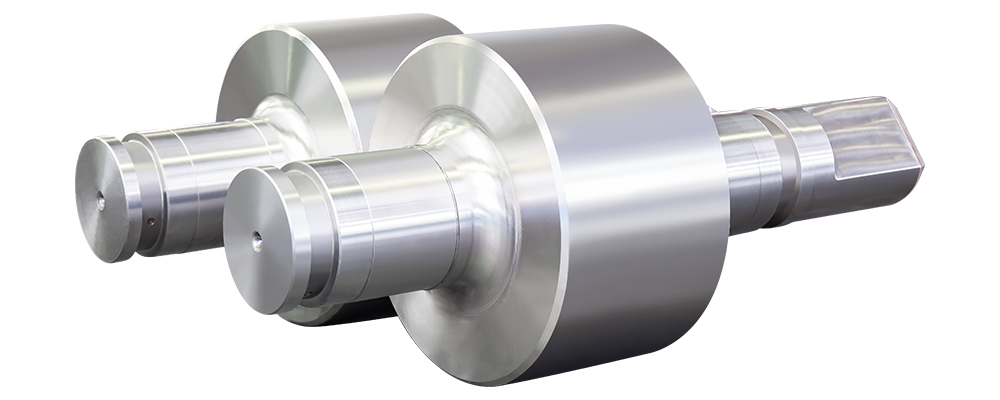
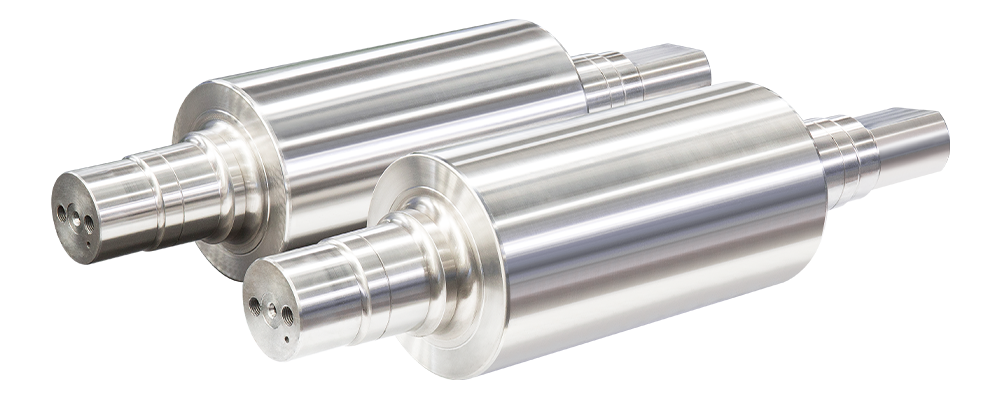
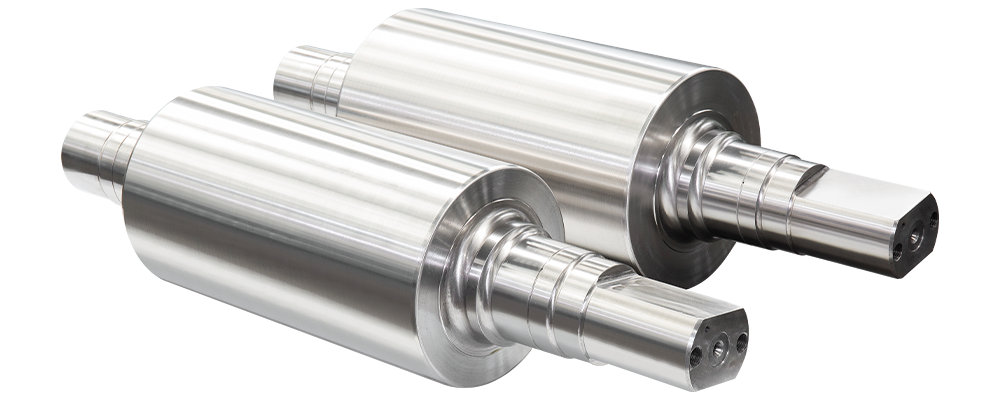
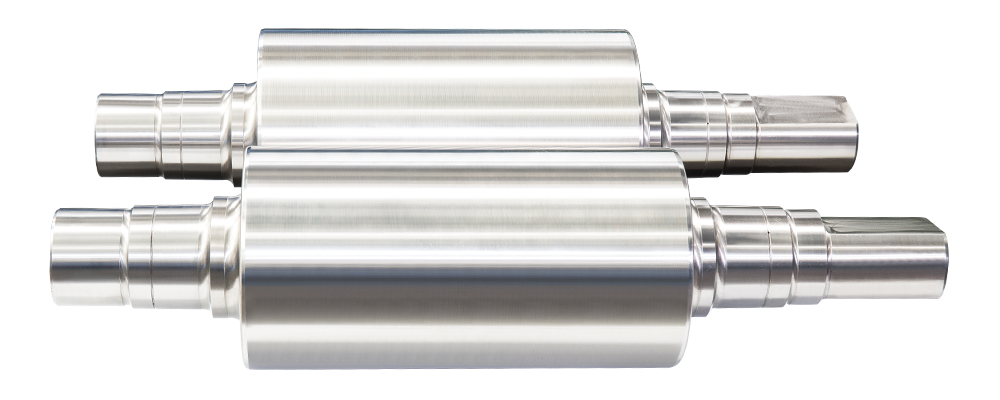
High speed steel rolls are fundamentally iron based alloys with high carbon and vanadium content, bolstered by chromium, molybdenum, and tungsten. Unlike tool steel counterparts, the roll variants are engineered primarily through centrifugal casting to create a composite structure where the outer shell does the work and the core provides mechanical integrity.
The microstructure features a tempered martensitic base that resists deformation, reinforced by primary carbides of the MC type, specifically vanadium-rich carbides, which are chemically stable and reach microhardness levels above 2800 HV. Secondary carbides, including molybdenum and tungsten rich types, form during tempering and enhance hot hardness. This dual-phase structure enables a stable wear profile throughout the roll campaign, avoiding the sudden surface deterioration seen in iron rolls.
Carbide morphology matters as much as volume fraction. Tight control of solidification rates in centrifugal casting ensures a fine, evenly distributed network of carbides rather than coarse networks that act as crack initiators. Rolls designed for the most severe early finishing stands typically contain 5 to 10 percent vanadium, deliberately pushing the alloy cost up to secure longer rolling intervals between changes.
The dominant production method is centrifugal double pouring. A high speed steel outer shell is cast first under controlled rotation, followed by a nodular iron or graphitic steel core poured sequentially to achieve a metallurgical bond. This process demands exceptionally tight process control to prevent dilution of the shell alloy and to manage the transition zone.
Key process parameters that determine roll performance include:
Powder metallurgy and hot isostatic pressing represent an alternative route for the highest specification rolls, eliminating segregation entirely. In this approach, gas-atomized powder of the exact target composition is consolidated, resulting in a fully isotropic and carbide-homogeneous microstructure. While significantly more expensive, powder metallurgy rolls achieve bend strength values above 3500 MPa, suitable for the exceptionally high rolling forces of modern thin slab casting rolling lines.
| Process | Carbide Distribution | Segregation Risk | Typical Shell Thickness |
|---|---|---|---|
| Centrifugal Casting | Gradient across wall | Moderate to high | 50–80 mm |
| Continuous Pouring Cladding | Uniform with transition zone | Low | 60–100 mm |
| Powder Metallurgy HIP | Perfectly isotropic | None | Full monoblock |
In early finishing stands F1 to F3, high speed steel rolls undergo a combination of abrasive wear, thermal fatigue, and oxidation. The oxide layer that forms on the roll surface at temperatures above 550 degrees Celsius acts as a protective glaze, and the chromium and molybdenum content in the steel stabilizes this layer, reducing sticking and pickup from the rolled strip.
Primary wear in these rolls is dominated by the gradual erosion of the tempered martensite matrix surrounding the primary carbides. Because the vanadium carbides are harder than any mineral abrasive in the oxide scale, they stand proud and protect the underlying material in the same manner that cobblestones resist erosion. Data from long-term mill trials show that shell hardness retention stays above 80 Shore C even after thousands of tons of rolling, whereas indefinite chill rolls typically drop sharply after comparable throughput.
Firecracking resistance is the limiting factor in many applications. The high carbon equivalent that delivers wear resistance also reduces thermal conductivity and ductility. Rolls subjected to insufficient interstand cooling develop a network of fine surface cracks that eventually propagate. The best-performing high speed steel grades balance carbon and vanadium to ensure that the thermal expansion mismatch between carbide and matrix does not initiate crack growth under cyclic thermal loading.
High speed steel work rolls for cold rolling and temper mills present a different set of demands. Here shell hardness routinely exceeds 85 Shore C, with the microstructure engineered for extreme compressive yield strength and resistance to rolling contact fatigue. These rolls compete directly with forged chromium steel and semi-high-speed grades, winning on campaign length where mill vibration permits their use.
The fine carbide structure achievable through modern powder metallurgy routes proves decisive in cold applications. Surface pitting and spalling, the dominant failure modes in cold work rolls, are directly retarded by a high density of hard, coherent carbides below 3 micrometers in size. Electro-discharge texturing and laser texturing further extend the operating window by creating a deterministic surface roughness that holds lubricant and minimizes metal-to-metal contact during high-speed threading.
Matching the correct high speed steel grade to a specific mill stand prevents both premature failure and unnecessary alloy cost. A common classification scheme groups rolls by carbon and vanadium content, as these elements predominantly control the balance of wear resistance against toughness.
| Grade Category | Carbon Range | Vanadium Range | Target Stands |
|---|---|---|---|
| High-Toughness HSS | 1.5–1.8% | 3–5% | Roughing, F1, F2 |
| Standard Wear-Resistant HSS | 1.8–2.2% | 5–7% | F2, F3, F4 |
| High-Carbide HSS | 2.2–2.8% | 8–10% | F3, F4, early plate |
Molybdenum and tungsten are often interchangeable on a half-percent basis for achieving secondary hardening, though molybdenum-based alloys show a slight advantage in thermal fatigue resistance due to lower segregation tendency during centrifugal solidification.
High speed steel rolls place unique demands on grinding wheels and dressing cycles. The very carbides that give the roll its wear advantage also act as hard spots that can cause burn, chatter, and micro-checking during regrinding if the wrong abrasive is selected. Ceramic-bonded cubic boron nitride wheels or engineered-seeded gel alumina wheels are now standard for these materials because they maintain a sharp cutting profile against the hard vanadium carbides.
Best practice grinding guidelines include:
Roll shop temperature management before regrinding also matters. High speed steel rolls should cool uniformly to below 50 degrees Celsius before abrasive contact, because residual heat can locally alter the surface hardness reading and lead to undergrinding of thermal softening zones.
The higher cost of high speed steel rolls relative to indefinite chill or high-chrome iron must be justified through total rolling cost analysis. A typical high speed steel work roll for a hot strip mill finishing train costs between 3 and 4 times the price of an equivalent indefinite chill roll, yet the cost per ton of steel rolled is frequently lower due to fewer roll changes, less grinding consumption, and more consistent product quality.
The economic calculation must include the value of increased mill utilization. Every avoided roll change saves roughly 15 to 25 minutes of downtime, and across multiple stands this directly increases rolling capacity. When monthly throughput targets are tight, the premium alloy becomes self-financing through additional production. The case is clearest in tandem cold mills and hot strip mills running thin gauges, where profile and flatness demands leave little margin for roll surface deterioration.
Despite their advantages, high speed steel rolls demand disciplined mill practices. The principal failure modes in hot mills are banding and catastrophic spalling. Banding occurs when an excessively built-up oxide layer on the roll surface spalls off in a circumferential band, leaving a depression that marks the strip. This is directly linked to roll cooling nozzle condition and water distribution across the barrel face.
Spalling, particularly in the shell-to-core interface zone, is most often a consequence of inadequate transition zone design or excessive residual stress from heat treatment. Nondestructive ultrasonic testing immediately after delivery and periodically during the roll life detects subsurface discontinuities before they reach critical dimensions. Mills that track defect evolution with phased array ultrasonic probes consistently achieve longer total roll life than those relying on visual inspection alone.
The correct application of high speed steel rolls remains a systems challenge rather than a simple material substitution. Success comes from aligning roll metallurgy, coolant management, pass schedule design, and predictive maintenance into a single coherent strategy.

Copyright © Huzhou Zhonghang Roll Co., Ltd. All Rights Reserved.


 English
 中文简体
中文简体