Content
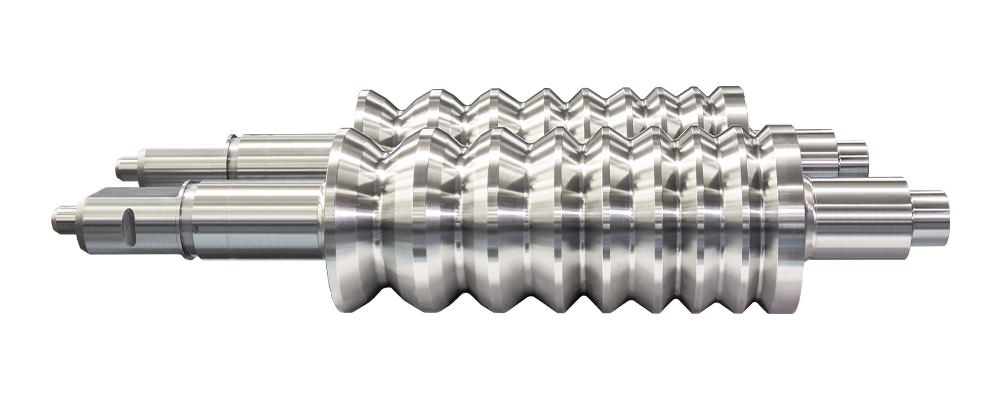
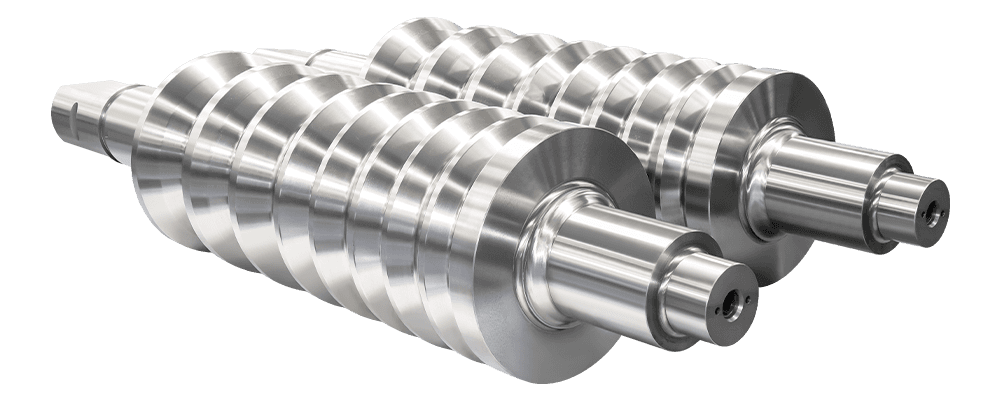
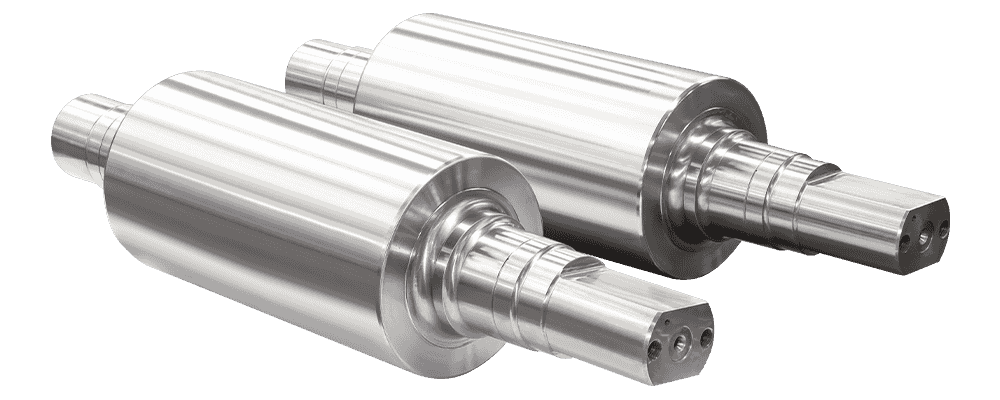
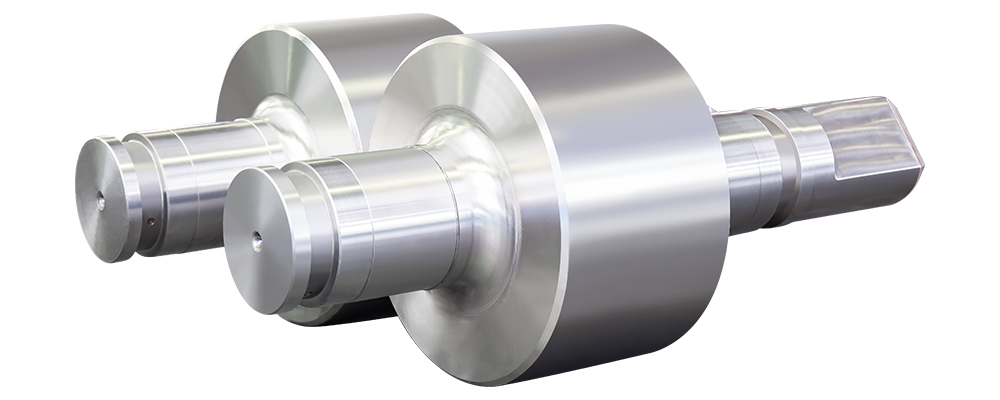
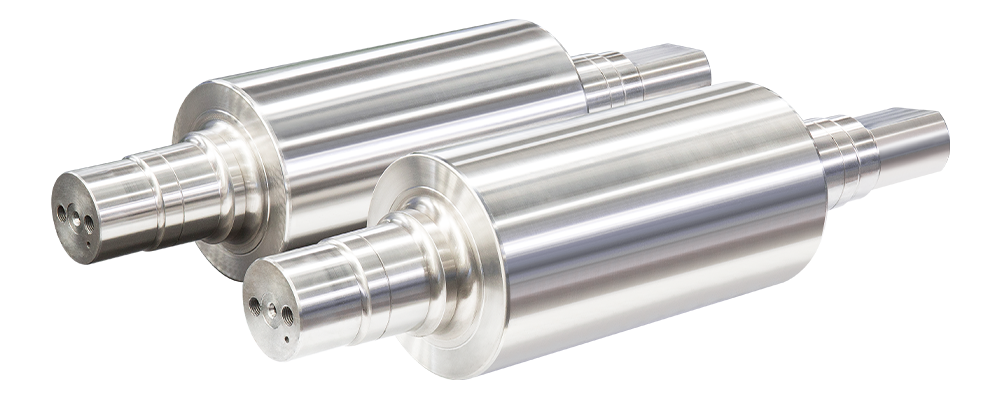
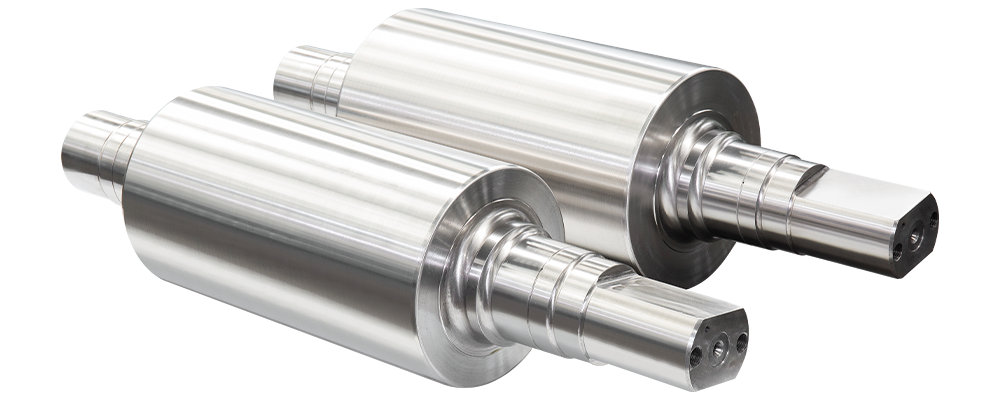
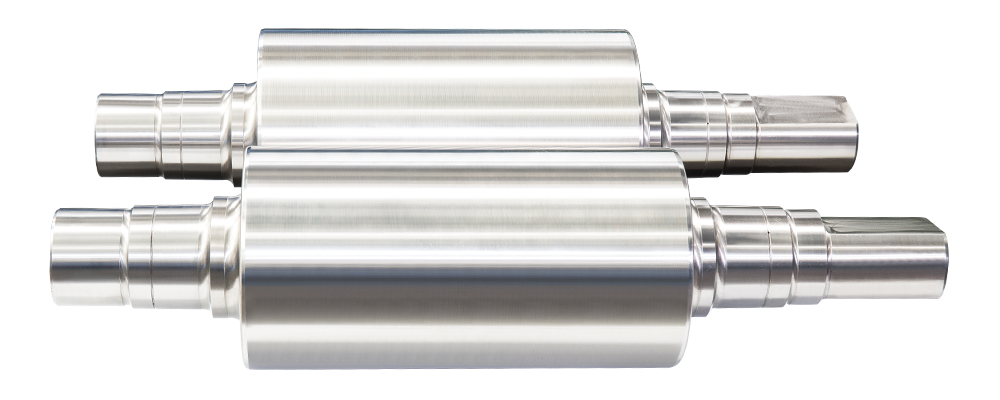
A roughing stand that goes through rolls too fast doesn't just drive up consumable costs — it disrupts the entire campaign schedule. For section mills, blooming mills, and bar mills handling heavy reductions at high temperatures, the material choice matters enormously. graphite steel roll has become the preferred solution for these demanding positions, and for good reason: its microstructure solves several problems at once.
The defining feature of a graphite steel roll is the presence of fine spherical graphite particles distributed within a pearlitic steel matrix. This isn't incidental — it's engineered. The graphite acts as a solid lubricant, reducing friction at the roll-stock interface and significantly suppressing the adhesion of oxidized iron scale to the roll surface. That alone extends groove life and improves surface quality of the rolled product.
Beyond lubrication, the graphite phase raises thermal conductivity. Heat generated during high-reduction rolling is dissipated more evenly across the barrel, keeping surface temperature gradients in check. The result is fewer thermal cracks, more stable dimensions under thermal cycling, and less aggressive water cooling requirements — a practical advantage in mills where cooling water volume is a constraint.
Compared to semi-steel rolls, the mechanical properties are similar, but graphite steel offers meaningfully better thermal crack resistance and oxidation scale adhesion resistance. Compared to pearlitic nodular iron, it delivers higher hardness and greater structural strength for deep-groove applications.
Not all graphite steel rolls are the same. Grade selection depends on the stand position, rolling reduction, and target hardness. The table below summarizes the chemical composition and hardness ranges for the three commercially available grades:
| Grade | C (%) | Si (%) | Cr (%) | Ni (%) | Mo (%) | Hardness (HSD) | Typical Application |
|---|---|---|---|---|---|---|---|
| GS150 | 1.40–1.60 | 1.00–1.70 | 0.60–1.00 | 0.20–1.00 | 0.20–0.50 | 40–50 | Section mill roughing, hot strip edger rolls |
| GS160 | 1.50–1.70 | 0.80–1.50 | 0.50–1.50 | 0.20–1.00 | 0.20–0.80 | 45–55 | Roughing mill, bar and wire mill intermediate |
| GS190 | 1.80–2.00 | 0.80–1.50 | 0.50–2.00 | 0.60–2.20 | 0.20–0.80 | 50–60 / 55–65 | Blooming mill blanking stands, heavy roughing |
All three grades are produced in barrel diameters from Φ400 mm to Φ1400 mm, covering the full dimensional range of typical section and blooming mill configurations. Impurity control is tight across the board: P ≤ 0.035% and S ≤ 0.030% are held in all grades to avoid embrittlement at the grain boundaries.
The graphite steel roll GS150 is the entry-grade choice: hardness of 40–50 HSD gives it enough toughness to absorb the shock loads typical of roughing stands, where pass reductions are large and the billet surface is still heavily scaled. Its relatively lower carbon content keeps brittleness risk low. It is well suited for section mill roughing, hot strip roughing passes, and edger rolls.
The graphite steel roll GS160 steps up to 45–55 HSD hardness, with a slightly higher carbon ceiling and broader molybdenum range (0.20–0.80%). The Mo addition stabilizes the carbide structure at elevated temperatures, making this grade appropriate for roughing mills where the thermal load is sustained over longer campaigns.
The graphite steel roll GS190 carries the highest carbon content (1.80–2.00%) and the widest nickel range (0.60–2.20%), which significantly increases both hardness (up to 65 HSD in the higher specification) and toughness for the combined demands of blooming mill blanking stands. Higher nickel content improves hardenability and ensures a consistent pearlitic matrix even in large-diameter rolls where section size affects cooling rates during heat treatment.
Understanding what each element contributes makes grade comparisons more meaningful than looking at hardness numbers alone:
Three questions guide roll selection in practice. First: what is the stand's reduction ratio? High-reduction roughing positions with deep grooves need the toughness of GS150 or GS160 over harder but more brittle alternatives. Second: what is the thermal cycle intensity? Mills with intermittent rolling and long delays between passes create aggressive thermal cycles — graphite steel's conductivity advantage is largest in these conditions. Third: what is the billet entry temperature? Blooming mill entry temperatures above 1150°C put higher thermal stress on the roll surface; GS190's enhanced alloy content handles this without the thermal crack risk that would affect a lower-grade material.
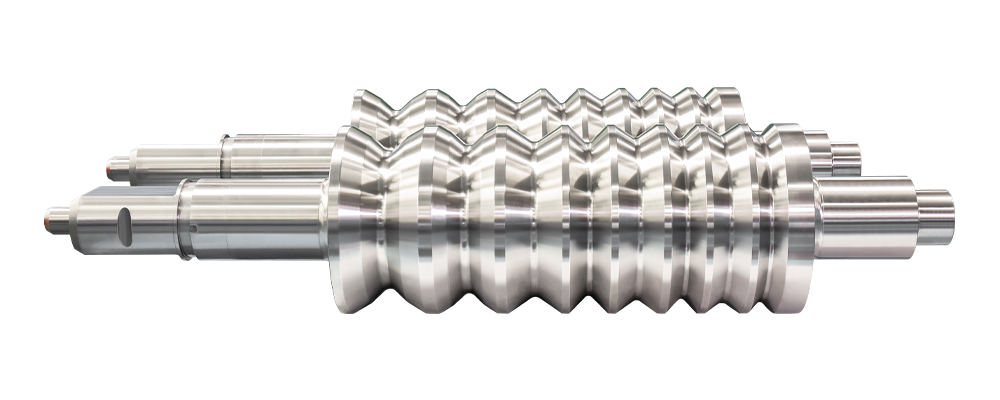
The full graphite steel roll product range covers section mills, bar and wire mills, blooming mills, hot strip roughing, and edger positions — essentially every stand category where toughness and thermal stability must coexist. For buyers evaluating cast steel roll options across multiple mill positions, mapping hardness requirements against stand position and entry temperature will narrow the grade decision quickly. When in doubt between two adjacent grades, the lower-hardness option is generally safer for campaign reliability; the difference in wear rate is modest, but the difference in breakage risk is not.

Copyright © Huzhou Zhonghang Roll Co., Ltd. All Rights Reserved.


 English
 中文简体
中文简体